The ten-second test for any slide
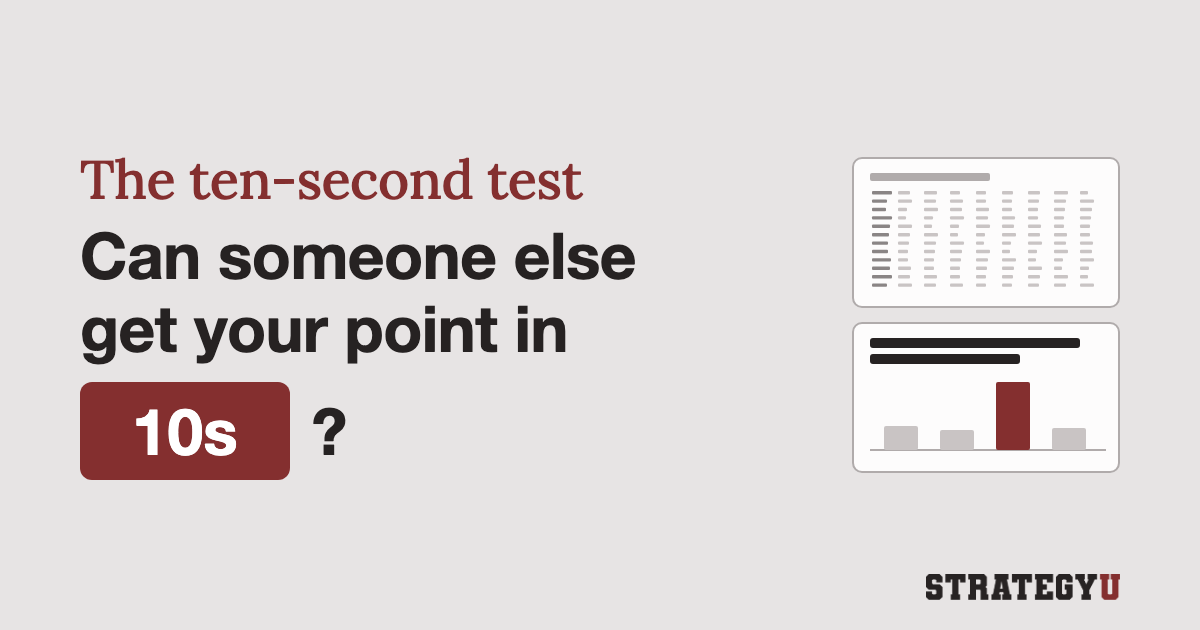
My favorite test for PowerPoint slides is simple. It’s called the ten-second test.
In ten seconds, can someone who doesn’t have the context repeat back what you want them to take away from the slide?
If so, it’s a strong slide. If not, it has work to do.
Take a look at this slide:
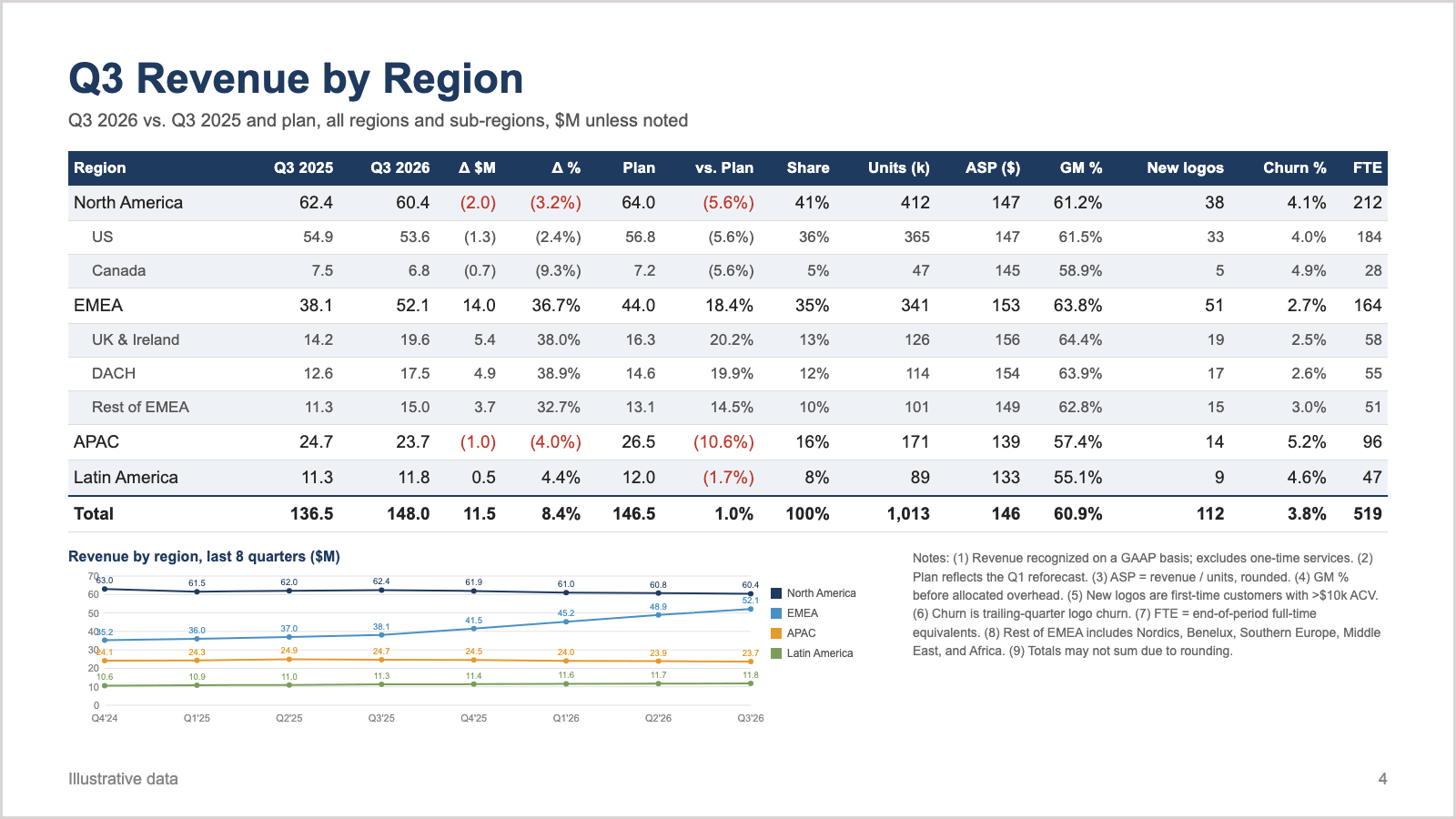
Notice your reaction when you try to decode it. You probably tightened your focus, started to feel a bit strained, and struggled to know where to look first. By the time you started reading the numbers, you were ready to give up.
Compare it with this one:
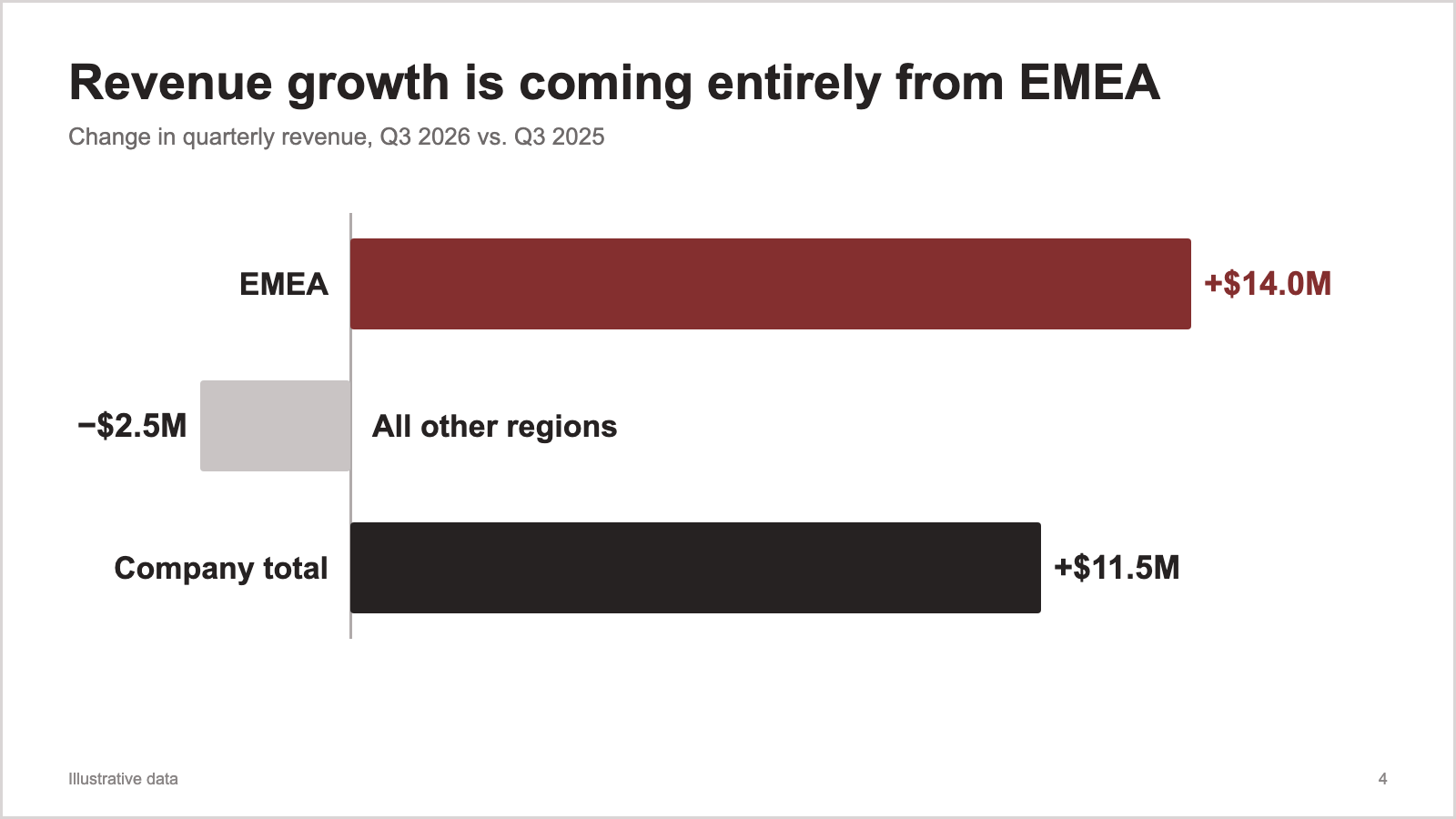
This is a lot easier to take in, right? You read the title, moved on to the chart, and the chart confirmed what the title told you to think.
Both slides use the same numbers. EMEA’s $14.0M gain is on the first one too, in the fourth row of the table, with nothing pointing you to it.
You should spend (much) more than ten seconds on simplifying and improving the slide
One of the traps of PowerPoint is that it has clear defaults. It has empty boxes to fill in, and most people end up plopping in a title and filling out some bullets, or copying and pasting in Excel sheets, tables, and talking points from another application.
The opportunity with PowerPoint is to do lots more iterations and get feedback, either from colleagues or, now, by prompting AI to give you critical feedback to make it better.
It can help to ask someone with no context on what you’re talking about a few questions:
- What do you think this slide is trying to tell you?
- Does this slide make sense?
- What do you think you’re supposed to do after finishing this slide?
Nearly every failure I see traces back to a title that names a subject instead of stating a finding, which is what action titles exist to fix. Once you see that, improving a slide shifts to improving its title rather than trying to share a lot of information.
Two thirty-second relatives
Two other tests come from Barbara Minto and Ethan Rasiel.
In The Pyramid Principle, Minto argues that a proper introduction, which for her already includes a statement of the key line points, means “the reader can get your entire thinking in the first 30 seconds or so of reading.”
Indeed, if your entire thinking is not clear to the reader in the first 30 seconds of reading, you should rewrite.
Rasiel’s elevator test, from The McKinsey Way, is another test worth applying, especially as you approach the finish line on your project or deliverable.
Most people understand what an elevator test is, but I’ll let Rasiel explain it:
Know your solution (or your product or business) so thoroughly that you can explain it clearly and precisely to your client (or customer or investor) in 30 seconds.
He goes on: “If you can do that, then you understand what you’re doing well enough to sell your solution.”
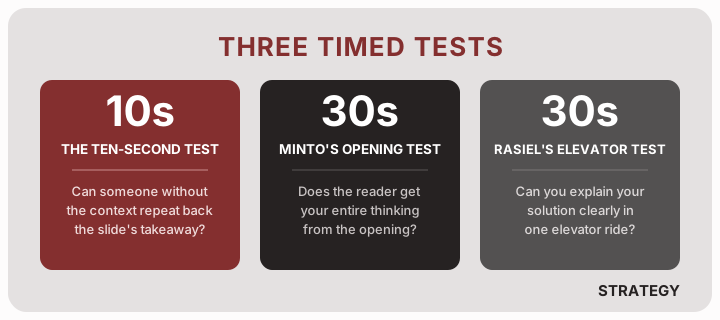
So maybe instead of the ten-second test, it’s ten seconds, then thirty, then thirty.
From good slides to a good story
A good slide is one thing, and if you can create compelling, clear slides, that is a real accomplishment. The next step from there is connecting a series of slides using principles like horizontal flow, direct and indirect sequencing, and deductive and inductive logic to make a strong argument across an entire deck or presentation.